Sunday, June 15, 2008

Why Did It Have To Be Snakes?

I'm a sucker for promotional marketing, and I'm a big Indiana Jones fan, so you know these last few months have been rough on me. There's Indy paraphernalia everywhere, and I have to fight with myself not to buy it all. I was accosted by a table full of Indiana Jones books, and I limited myself to one and went with Why Did It Have To Be Snakes?

The book attempts to dissect each movie in order to discuss the scientific fact behind the parts of the story. Does it succeed in doing that? Yes, definitely, but not necessarily in a way that makes it enjoyable or readable.

Reading this book was a lot like reading Wikipedia, but not in the fun way, where you link from topic to topic in a logical string of connections. Instead, topics are broached in the order that they appear in the films, making for pretty disconnected reading. First you're reading about South American native tribes, then about how bullwhips work, then about Nazi airplanes and submarines, ending with a section on Judaism. Yes, all of that is central to the plot of Raiders of the Lost Ark, but reading about them in that order makes the book hard to handle.

Thursday, June 12, 2008

World War Z

After a zombie uprising that leads to a ten-year struggle between humans and zombies, a journalist is sent around the globe to conduct interviews and put together a report based on the events of World War Z. This book (subtitled "An Oral History of the Zombie Wars") is told through the talking-head-style interviews and tracks the path of the zombie uprising and the eventual human victory.

It is a very realistic book - there are many passages where the word "zombie" could easily be replaced with any other foe. With the vivid descriptions in this book, it feels like these events could really happen (which is why it's a good thing Max Brooks also wrote The Zombie Survival Guide, to help us all through the tough times).

I'm personally a huge fan of the talking heads writing style. Last year, I was totally captivated by Chuck Palahniuk's Rant, which uses the same narration style to tell the life story of Buster "Rant" Casey. From what I've heard, many readers have a problem with essentially "starting over" with a new narrator every few pages, but I've found that having all those different points of view make the description of something as global as a World War that much easier to understand. If it were told by one person, the grandiose nature of the story would be minimized from only hearing one side of the story.

Brooks, a former SNL writer, did a fantastic job with this book, and I'd love to see what else he could bring to the page.

Wednesday, June 11, 2008

New Moon

New Moon begins with Bella's 18th birthday, with a party hosted at the Cullen's home. But Bella, in typical clumsy style, ends up getting hurt, and once her blood is spilled, the vamps have a hard time resisting. Shortly thereafter, the Cullen's leave town, leaving Bella to her thoughts... and to a burgeoning friendship with Jacob.

Despite Jacob's role in caring for Bella in Edward's absence, I'm still firmly an Edward girl. I think this mostly has to do with Edward's 80-something years of experience and how suave he can be because of that. Jacob is still an awkward teenager, and he doesn't have the weight of "eternity" behind his actions.

Truth be told, I feel a little odd, having been so completely enamored by this series meant for teens. I've read these first two books incredibly quickly, and I'm already well into book three. What are some other great series (YA or not) that have pulled you in?

Tuesday, June 10, 2008

Then We Came to the End

I went to my first meeting of the Brookline Booksmith Book Club yesterday to discuss Then We Came To The End by Joshua Ferris. The group was quite mixed on the book, but the overall rating was 3.6 out of 5.

Then We Came To The End follows a group of coworkers in a Chicago ad agency during the summer of 2001. Lay-offs are rampant, and the staff is abuzz with rumors about who will be next. The group is filled with characters - at least, until you realize that they're not really characters so much as people you know. There's the guy who likes to read inspirational quotes to people, the girl who has to try every new restaurant in the city (yeah, I've been her at times), the couple who are not-so-secretly having an affair, and the one guy who refuses to play along with the whole "game" of office politics.

Every time someone is fired in the book, the term "walking Spanish" is used, referencing how pirates used to lift Spanish sailors up by the scruff of their necks and make them walk on their tip-toes before throwing them off the decks of their ships. I really like the term, and it has found its way into my own vocabulary now. I always have to laud an author who can manage to do that.

My favorite part of the book was something that seemed gimmicky to some of the book club members: it is told in the first person plural - "we". In a book that is ostensibly about the shallow relationships formed at work and the way coworkers get wrapped up in gossip, using "we" allowed the reader to more intimately become a part of the goings-on. The section in the middle, however, detailing one evening in the life of the boss, was told in third person singular, making the jump in point of view jarring. I would have preferred the story to stay with the first voice the entire time, making the reader's (shallow) connection to the characters that much stronger.

Sunday, June 8, 2008

24 Hours of Reading? Count Me In!

Reading for 24 hours straight? Um, yes please.

I stumbled across this blog the other day and saw a post for the 24 Hour Read-a-thon. Starting at 9 am PST (noon here) on Saturday, June 28th, a whole bunch of bloggers (32 are signed up as of right now) will stay up all night to read as much as possible, post on their blogs about their books, and check out other blogs to cheer participants on.

I'm looking forward to checking out everyone else's blogs on the 28th and 29th. Until then, I need to start putting together a reading list - I want to have plenty on hand so I can choose whatever sounds good at the time. Have any suggestions for me?

Saturday, June 7, 2008

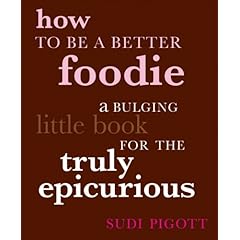
How to Be a Better Foodie


Have you ever read a book and felt insulted by it? Yep, that's what I got out of How to Be a Better Foodie: A Bulging Little Book for the Truly Epicurious. It felt too precious, like the author was trying to prove just how much she loves food. She talks about being ahead of the curve for trends and honing the ability to find special ingredients, but she rarely talks about how things taste.

I fear that some readers might see this book as a checklist of things to covet or try in order to become a "Better Foodie." In reality, just knowing what you like and being able to talk that with some degree of knowledge is plenty. On my food blog, I don't pretend to know everything about food; I only talk about my opinions and what I personally find enjoyable. This book is exactly the kind of thing I'm trying to stay away from when I talk and write about food.

Tuesday, June 3, 2008

The Sea of Monsters


Wow, I've really been on a YA binge lately. I started the Percy Jackson and the Olympians series last month. The first book, The Lightning Thief, follows Percy Jackson as he finds out that the things that have troubled him his whole life - dyslexia, ADHD, trouble making friends - were all because he was a demigod - half human, half Olympian. Percy arrives at Camp Half-Blood, meets all the other half-bloods, and goes on a cross country quest to find Zeus' missing lightning bolt.

The second book in the series, The Sea of Monsters, has a similar set-up: Percy comes to Camp Half-Blood suddenly and is presented with a quest - this time to save his satyr friend Grover from being eaten by the cyclops Polyphemus. The resulting travels to the Sea of Monsters (aka the Bermuda Triangle) follow Homer's Odyssey fairly closely, complete with trips to Scylla and Charybidis, Circe's island, and Polyphemus' sheep farm.

With this second book, the idea of a prophesy surrounding Percy becomes more clear as well. It was hinted at in the first book, but here, the prophesy is stated outright - but only before it becomes somewhat unclear as to who it pertains to. Very reminiscent of the whole Harry Potter and Neville Longbottom thing...

Speaking of Harry Potter, this series has claimed a little of the Harry Potter hype. Percy, like Harry, is something of an outcast, even once he is among "his own kind." He has few friends, one of whom is a smart girl who knows she's right about everything. And instead of magic, there's plenty of Olympian gods and monsters popping by, showing off exactly what they can do. Oh, and Chris Columbus is apparently directing the first movie, which should be out in about a year and half.

I originally picked up the first book to give to my nephew, but I was too intrigued not to read it myself. I would definitely recommend it to anyone who enjoys Classics, as these stories are able to twist the familiar into something new and fresh.