Showing posts with label books. Show all posts

Wednesday, September 10, 2008

American Wife

When I first saw the ad for Curtis Sittenfeld's new novel, American Wife, I was excited. I loved how Sittenfeld was able to get inside a teenager's head in her first novel, Prep, and I could only expect that she would do the same with this one.

And I was definitely not disappointed. American Wife tells the story of Alice Lindgren Blackwell, wife of the American President. Following events that may lead to substantial trouble for the Blackwell presidency, Alice recounts previous times in her life that have led her to this point. From there, the story is split into 4 sections: Alice's teen years, her work life and first meeting her husband, life as a wife and mother, and finally, her time in the White House. The different sections were a bit uneven, as I found the second and third sections the most compelling. However, Sittenfeld definitely succeeds in capturing Alice's thoughts - as a shy teenager, a mostly-confident-with-herself woman, a wife, a mother, and a public figure. Definitely an engaging and fulfilling read.

There has been much discussion of this book in light that it is basically a fictionalized life of Laura Bush. Thankfully, politics is left out of most of the book - mentioned increasingly in subsequent sections, with the final section most obviously immersed in politics. The key point, though, is that the First Wife is not the President - they are separate people, with separate thoughts and ideas. Considering how little we have heard from Laura in the past 8 years, I found this an interesting take on the personalities within the White House.

Wednesday, August 13, 2008

The Road

I love dystopian fiction - the grittiness, by definition, highlights aspects of human nature that don't often appear in other genres. So when I heard about Cormack McCarthy's The Road, I was excited - a man and boy walk towards what they hope is (relative) safety. Everything I've read about the book has hailed it as a post-apocalyptic masterpiece - it was even an Oprah book (which, in most cases, is a mark against in my book) and is being made into a movie.

So imagine my disappoint when I read something like this:

Whats that?
Where?
There. Theres a house.
I’ll go take a look. Take the gun.
No, I’m scared.
I know.

What if the bad guys come?
You can come with me youd like.
The man knew he wouldnt want to be alone.
Okay.
Okay.

Note that this is not the text of the book, but it's so damn close, it's hard to tell. I mean, I was expecting some great masterpiece, but all I got a rough sketch of a story with sporadic punctuation and meaningless dialogue. The most interesting parts of the story - mainly, when the man and boy encounter others - were also the most difficult parts to read, as adding more voices than the narrator, the man, and the boy without any indication of who was speaking made it much too confusing. And even if the story and dialogue had been stronger, I don't think I could have looked past the grammar - why use apostrophes in some places but not others! It's maddening, like McCarthy just simply couldn't be bothered to adhere to any rules.

Water for Elephants

I was never a big fan of the circus as a kid. There was always too much going on, too much noise, too much activity. But when I started watching Carnivale on HBO a few years ago, I loved the gritty, dirty feel of the Depression-era circuses. Water for Elephants by Sara Gruen tells a similar gritty, dirty story.

Gruen’s research is what makes this story worth reading. The daily life of a circus is brought to life through the pages of Water for Elephants in a very compelling way. The story is interesting, but I was driven to read by the desire to know more about the time period. Even if you don’t think the subject matter would interest you, this book is definitely worth reading – it would be hard not to be interested in it by the end.

Thursday, August 7, 2008

Breaking Dawn

It’s been a while since I have been quite so excited about the release of a book – I think Ellen Emerson White’s Long May She Reign (the continuation of a series that I read when I was actually a teenager) was the last book I couldn’t wait to get my hands on. So I let my inner 16-year-old girl out for the release of Breaking Dawn, the final book in the Twilight saga by Stephenie Meyer, and spent an entire day (my birthday, in fact, and an enjoyable birthday it was) just reading.

Was I right to get so worked up for this book? Yes… and no. The first three books (well, really just books one and three) totally captivated me. Just the fact that they were able to make me think like a 16-year-old again was a testament to Meyer’s writing. But with all the Twilight talk (both about this new book and the horrible miscasting of the upcoming movie), the book just couldn’t meet the hype.

The biggest problem that struck me was that the story read like fanfiction – stories written by fans who can’t give up on their favorite characters. Don’t get me wrong, there’s some excellent fanfic out there, but I expect a little more from someone so in charge of the story and from something I’m paying money for. Breaking Dawn even adheres to the fanfic tenant that the characters you love the most suffer the most – I mean, Bella has always been a little too clumsy, a little too breakable, but come on… really?

Surprisingly, I quite enjoyed the middle section of the book, told from Jacob’s POV. I was highly pissed off at the end of Eclipse, when the narration slipped to Jacob without warning, but in this case, I was relieved not to be in Bella’s head for a little while. And through Jacob, there was much to learn about the way the La Push pack operates.

Honestly, I couldn’t have cared less about the finale. There was so much build up for very little conclusion. But I guess that just means that I’ll have to turn to the real fanfic now to find some more good Twilight stories…

Saturday, August 2, 2008

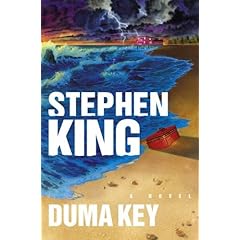
Duma Key

As a long-time Stephen King reader, I know that I'll eventually pick up any book that he writes. I've had Duma Key sitting around for a while - it's pretty thick, and I wasn't up for investing the time in it. But after hearing several times that it was his "return to form," I was ready to give it a try.

And in a way, it is a return to form. The scene is clearly set, the characters (bizarre backstories and all) are well defined, and the strange supernatural villain is creepy as all get-out. But it's also a little slower than his past works - the first two-thirds took me two weeks to read, while the final third was completely gripping and took only two days.

Edgar Freemantle, late of Minnesota, takes up residence on Duma Key in Florida following a disastrous accident. While there, he meets his eccentric neighbors, including the old woman who owns the island, and discovers an unknown talent for painting. But the paintings hold a strange ability to bring his ideas to life, dictated by the powers of the island.

There are many images, especially from the last third of the book, that will be sticking with me for a long time. King is still a master at describing a moment so creepy that it burns its way into your memory. And while I don't think I would recommend this as an entry point into King's repertoire, it is a solid piece of writing that won't be soon forgotten.

Wednesday, July 30, 2008

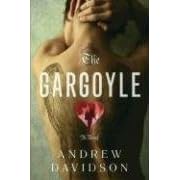
The Gargoyle

The setup of The Gargoyle by Andrew Davidson sounds a bit like a Stephen King novel (especially his recent books that deal with convalescents) - a horribly burned man meets a brilliant gargoyle carver/mental patient who convinces him to come back to her place after he is released from the hospital. The narrator (our burned ex-porn star semi-hero) isn't sure about Marianne Engel (the artist/schizophrenic) at first, mostly because she claims to be over 700 years old and to have known him in a past life. But he begins to trust her and does eventually end up at her home, where he learns the story of their past relationship.

I really loved this book, but for reasons I can't quite explain. It's not like I have anything in common with any of the characters or their situations. I think it's more the "1001 Arabian Nights" quality of Marianne's storytelling that captured me - the narrator longs to hear more about the perceived relationship between himself and Marianne, but she keeps interjecting other tales of love lost. By the time he understands his feelings for her, though, those other stories are as much a part of him as they are of her. In fact, it was the past-life story, along with the other stories that Marianne told, that were the most compelling part of the narrative for me - I cared more about the lovers from the past than the horrors of the present.

I really enjoyed Davidson's writing style because it wasn't overly fancy. Rather, the story is told by someone who has had a lot of time to reflect on what happened, and as such, is described in very realistic terms. Such a strong narrative is hard to find in a debut book, and I'm curious to see what else Davidson can do.

Tuesday, July 22, 2008

Last Night at the Lobster

I picked up Last Night at the Lobster by Stewart O'Nan randomly from my school library's small fiction collection, mostly because I find Red Lobster hilarious. See, there are no Red Lobsters in Massachusetts, and my mother gets in a rage whenever she sees a commercial for one on TV - "the closest Red Lobster is in Connecticut" she yells at the screen, "stop telling me about them!" So a book about a Red Lobster in Connecticut closing made me laugh.

I had never read anything by O'Nan, but I've heard good things. At first, I was a little turned off by his writing style - it's almost overly-literary for such a mundane topic. But it didn't take me long to appreciate it, as details are described in ways that make them completely true to life. O'Nan managed to make something as boring as a defunct chain restaurant beseiged by snow seem compelling. I'm not saying that Last Night at the Lobster is an earth-shattering book in any way, but it's an enjoyable, highly readable short novel. I'm glad that I've given O'Nan a shot, and I look forward to reading more of his books.

Wednesday, July 9, 2008

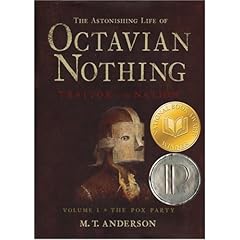
The Astonishing Life of Octavian Nothing, Traitor the the Nation, Vol. 1

Octavian is raised in a world of science and is told from a young age that he is an exiled prince of a great African nation. However, when rumblings of revolt shatter the walls of the lyceum, the true nature of Octavian's birth and life are revealed.

The Astonishing Life of Octavian Nothing, Traitor to the Nation, Vol. 1: The Pox Party opens in a time and place which are unclear, but as the story unfolds, it is clear that it takes place in Boston just before the American Revolution. The writing style, mostly in the voice of Octavian himself, is therefore very florid and somewhat archaic, making it very hard to digest as a Young Adult novel. In fact, because of the writing style, I can't picture many young adults getting far enough into the book to discover the historical aspects of it. That's not to say that it's not a good book - just that it may be missing the mark a bit.

I did have another problem with the writing style - Octavian's narrative is interspersed with letters from various characters, which is fine, as they add another depth to the narrative. However, about two-thirds of the way into the book, the narration changes to letters written by one Patriot soldier, who happens to meet and befriend Octavian. Then, there is another abrupt switch back to Octavian's POV. This was terribly jarring to me and, while I realize that Octavian wasn't in his usual mindset during that part of the story, I felt a bit cheated to only get the soldier's side of the story.

Overall, I can't say that I recommend this book, unless you are really interested in historical fiction dealing with the American Revolution. For stories dealing with that time period, though, this is a breakthrough novel, both in terms of the narrator and in the narration style. if you enjoy this book, Volume 2: The Kingdom of Waves, will be released in October.

Thursday, July 3, 2008

Queen of Babble in the Big City

Lizzie met the man of her dreams and found her calling in France. Now she's moved to New York to try to make both of those things work for her. She jumps into living with her boyfriend Luke, after only a few weeks together, and is forced to take an unpaid job reworking wedding dresses to make her career goals. Of course, things are less than stable, and Lizzie has to stand up for what she wants.

In typical over-the-top style, Queen of Babble in the Big City is an enjoyable, fast-paced chick lit novel. I mean, there's really nothing earth-shattering with this series, but Meg Cabot knows how to handle funny, self-deprecating, driven women. I prefer her books The Boy Next Door, Boy Meets Girl, or even the Heather Wells mystery series (which begins with Size 12 Is Not Fat), but the Queen of Babble series is a good time. Book 3, Queen of Babble Gets Hitched, was just released, so I'm sure I'll be picking that up soon for a beach read.

Sunday, June 29, 2008

The Titan's Curse

The Titan's Curse is third in the Percy Jackson & the Olympians series by Rick Riordan. Overall, the stories are getting a little repeatative, and yet, I couldn't put it down. I'm still totally enamored of the melding of ancient myths with modern life. The first book of the series, though, still holds the most magic for me.

Saturday, June 28, 2008

I Was Told There'd Be Cake

I feel like I've found a sister and friend in Sloane Crosley. In I Was Told There'd Be Cake, her writing is witty and funny and full of things I wish I could come up with. She's like a female mixture of David Sedaris (for awkward family stories) and Chuck Klosterman (for pop culture references). This is definitely one of the best books I've read this year.

I've put a few quotes from the book in my last few posts, mostly because I'm alone in my apartment and, as with anything really funny, there's the desire to share it with someone.

Tuesday, June 24, 2008

Pomegranate Roads

I'm a huge fan of pomegranates (a passion that predates the whole Pom hoopla) and I often run Amazon searches just to see what will come up. While running one of these searches, I came up with Pomegranate Roads, A Soviet Botanist's Exile from Eden, by Gregory M. Levin. Levin is a punicologist, or pomegranate specialist, who spent over 40 years at Garrigala, the Soviet botany research station in Turkmenistan. During his time there, he traveled widely and collected over a thousand different pomegranate varieties. Sadly, with the collapse of the Soviet Union, Levin was forced to emmigrate, leaving his pomegranate collection to fate.

This book chronicles Levin's research, including many expeditions in search for more plants. Some portions of the book read like an adventure tale, with him surviving car wrecks and treacherous journeys. Other portions, where he focuses on people he worked with over the years, can be a little tedious, although it is sweet that he is paying homage to his colleagues. And as always, I wanted to know more about the mythology behind the pomegranate (although I was happy to read that both Levin and publisher Barbara Baer share my thoughts that the pomegranate was the "apple" that tempted Eve in the Garden of Eden).

This is, overall, a fast and enjoyable read. If nothing else, it made me want to live in California so I could have my own pomegranate tree, something that won't happen here in Boston.

To hear an interview with publisher Barbara Baer, visit the Pomegranate Roads website.

Wednesday, June 18, 2008

The Lace Reader

I managed to snag an advanced copy of The Lace Reader from a blog at my favorite local bookstore, Brookline Booksmith. I'm always up for a book that takes place in Massachusetts, and the Gothic nature of the story sounded fascinating. I have to say, I wasn't let down by this book at all.

Towner Whitney comes from an established Salem family - the men were traders and merchants and pirates. And the women? Psychics and readers - especially lace readers. Towner comes back to Salem after the disappearance of her great-aunt, Eva, who gave lace readings to locals and tourists alike in her tea room. Towner's mother, May, always an eccentric, takes in abused women and children and teaches them to make lace. But Towner herself has been avoiding lace since her twin sister committed suicide as a teen after a lace reading.

The book is itself a piece of finely crafted lace - read it patiently and all of its secrets will appear in time. Keep in mind that Towner's first paragraph includes the line "Never believe me. I lie all the time." Bit by bit, the details behind Towner's past materialize, knitting a web of overlapping truths and lies, light and darkness, as she herself comes to terms with what has happened to her.

Not only did I love the atmosphere and the story, but I fell in love with the lace as well. This book made me want to take up lace-making, and I've tried my hand at coffee reading, so why not lace reading as well?

Also check out the website for the book, which includes the first few chapters to read, tips of reading lace, and a great map of Salem which includes spots in the book.

Sunday, June 15, 2008

Why Did It Have To Be Snakes?

I'm a sucker for promotional marketing, and I'm a big Indiana Jones fan, so you know these last few months have been rough on me. There's Indy paraphernalia everywhere, and I have to fight with myself not to buy it all. I was accosted by a table full of Indiana Jones books, and I limited myself to one and went with Why Did It Have To Be Snakes?

The book attempts to dissect each movie in order to discuss the scientific fact behind the parts of the story. Does it succeed in doing that? Yes, definitely, but not necessarily in a way that makes it enjoyable or readable.

Reading this book was a lot like reading Wikipedia, but not in the fun way, where you link from topic to topic in a logical string of connections. Instead, topics are broached in the order that they appear in the films, making for pretty disconnected reading. First you're reading about South American native tribes, then about how bullwhips work, then about Nazi airplanes and submarines, ending with a section on Judaism. Yes, all of that is central to the plot of Raiders of the Lost Ark, but reading about them in that order makes the book hard to handle.

Tuesday, June 3, 2008

The Sea of Monsters


Wow, I've really been on a YA binge lately. I started the Percy Jackson and the Olympians series last month. The first book, The Lightning Thief, follows Percy Jackson as he finds out that the things that have troubled him his whole life - dyslexia, ADHD, trouble making friends - were all because he was a demigod - half human, half Olympian. Percy arrives at Camp Half-Blood, meets all the other half-bloods, and goes on a cross country quest to find Zeus' missing lightning bolt.

The second book in the series, The Sea of Monsters, has a similar set-up: Percy comes to Camp Half-Blood suddenly and is presented with a quest - this time to save his satyr friend Grover from being eaten by the cyclops Polyphemus. The resulting travels to the Sea of Monsters (aka the Bermuda Triangle) follow Homer's Odyssey fairly closely, complete with trips to Scylla and Charybidis, Circe's island, and Polyphemus' sheep farm.

With this second book, the idea of a prophesy surrounding Percy becomes more clear as well. It was hinted at in the first book, but here, the prophesy is stated outright - but only before it becomes somewhat unclear as to who it pertains to. Very reminiscent of the whole Harry Potter and Neville Longbottom thing...

Speaking of Harry Potter, this series has claimed a little of the Harry Potter hype. Percy, like Harry, is something of an outcast, even once he is among "his own kind." He has few friends, one of whom is a smart girl who knows she's right about everything. And instead of magic, there's plenty of Olympian gods and monsters popping by, showing off exactly what they can do. Oh, and Chris Columbus is apparently directing the first movie, which should be out in about a year and half.

I originally picked up the first book to give to my nephew, but I was too intrigued not to read it myself. I would definitely recommend it to anyone who enjoys Classics, as these stories are able to twist the familiar into something new and fresh.

Friday, February 8, 2008

Groundhog's Day - A Little Late

I'm completely in love with LibraryThing. I mean, yes, I have been a hardcore reader my whole life, and I am in library school now, so I am slightly predisposed to loving something as geeky as a website where you catalog your own books. But for me, it's more about the community where I can talk about what I'm reading - be it the latest bestseller or some obscure tome. I've been a LT member since June 2006 and have managed to get all 640 of my books cataloged.

Besides all the cataloging fun, LibraryThing also runs book pile contests every once in a while. These are my first entries, to this month's Groundhog's Day pile contest. While the books themselves aren't particularly in step with the holiday, I hope the pictures are at least a little amusing.

All the entries can be seen here.


The books on top are the Archaologische Bibliographie 1990-1993, from the library in my office. The books on the bottom are my Dark Tower books, an amazing series by Stephen King. I just started rereading the series for the first time since it was finished. If you haven't read them, now's a good time ;)